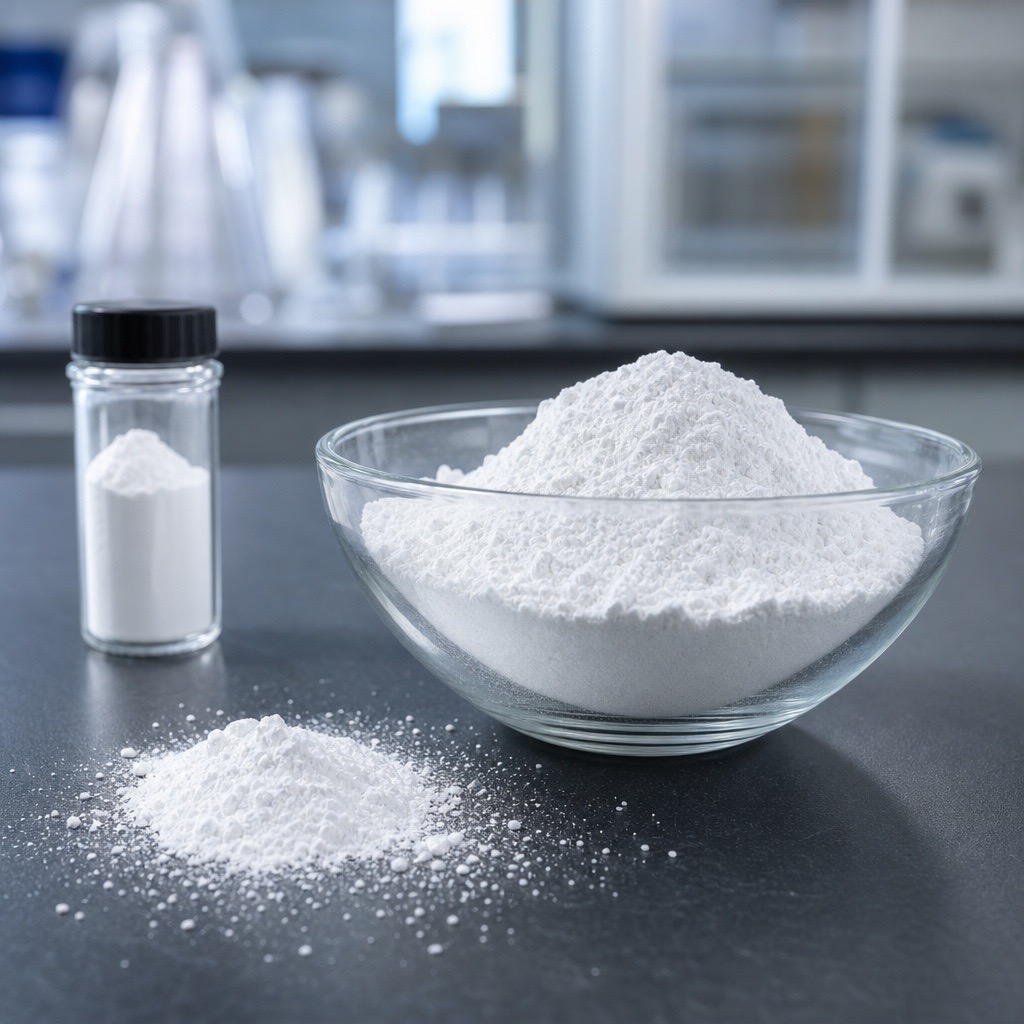
Real alternatives now exist
Get in touch to request samples, discuss custom formulations, or obtain volume pricing for your supply chain.
talk to a color expertThe European Union prohibited titanium dioxide as a food color additive in 2022, while the FDA continues to permit it in US food at levels up to one percent by weight, maintaining its position that the ingredient is safe at typical use levels. California considered including titanium dioxide in its 2023 food additive law but removed it from the final bill before signing, and a separate state law targeting school meals has also imposed restrictions on the ingredient at various points in its legislative process. This regulatory divergence between major markets is a primary driver of renewed interest in natural white alternatives, particularly for brands selling internationally or seeking to get ahead of a patchwork of state-level rules.
Titanium dioxide earned its dominance because it delivers strong, reliable opacity at a relatively low use rate across an enormous range of applications, from confectionery coatings to tablet supplements. A real alternative needs to replicate that opacifying function, not just add a white tint, which is why this category is fundamentally a light-scattering and particle-science challenge as much as a color one, a topic covered in more depth in our companion post on achieving opacity without titanium dioxide.
Calcium carbonate is a naturally occurring mineral with a long history of use in food as both a calcium fortification source and a whitening or opacifying agent. It delivers dependable, well-understood performance and is widely available at commercial scale, making it a common first choice when evaluating titanium dioxide alternatives.
The FDA approved calcium phosphate as a color additive in 2025, part of the same wave of natural color approvals that brought gardenia blue and Galdieria extract blue to market. As a newer entrant, it offers a genuine mineral-based alternative to calcium carbonate with its own particle characteristics and performance profile, which is covered in detail in our head-to-head comparison of the two.
Rice starch and rice extract offer a softer, less mineral-forward whitening effect than calcium carbonate or calcium phosphate, and their long-standing familiarity as food ingredients gives them a genuine label-appeal advantage in applications where a mineral-sounding ingredient name is less desirable.
Calcium carbonate and calcium phosphate both generally outperform rice-based alternatives when strong, dense opacity is the primary requirement, particularly in coatings and confectionery applications, where titanium dioxide previously delivered a bright, fully opaque white.
Rice starch and rice extract are worth prioritizing when a formulation team wants to avoid a mineral-sounding ingredient name on the label, even if it means a somewhat softer opacity that may require a higher userate or a supporting formulation strategy to match titanium dioxide's performance fully.
Brands selling into both the US and EU markets should treat this decision as a genuine compliance-planning exercise rather than a domestic reformulation nice-to-have, since titanium dioxide's EU prohibition makes a single, globally consistent formulation meaningfully simpler to manage than maintaining separate regional recipes.

© 2026 Vivify company llc | All Rights Reserved | SITEMAP | ACCESSIBILITY statement | TERMS