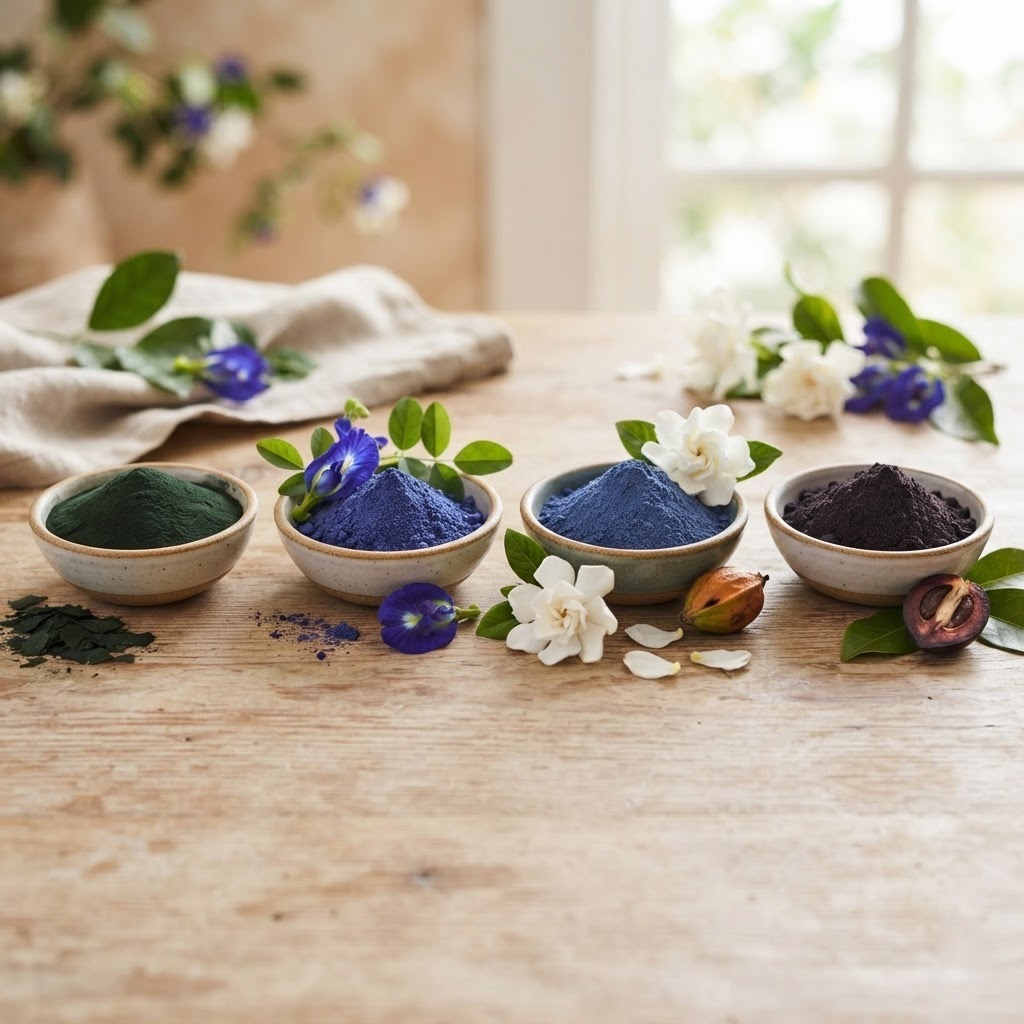
Select Correct Natural Blue
Get in touch to request samples, discuss custom formulations, or obtain volume pricing for your supply chain.
talk to a color expertBefore comparing sources, define exactly what the finished product needs to look like and how much variation is acceptable across its shelf life. A product that must hold a single, unwavering blue has very different requirements from one in which a gradual shift toward green or purple would still be visually acceptable. That distinction should drive the entire selection process.
Unlike red, orange, and yellow, where most natural sources receive broad approval across food categories, natural blue sources currently vary widely in the specific uses to which they can be applied. Gardenia blue, for example, is approved for a specific, narrower list of categories than jaguablue or spirulina. Confirming regulatory fit for the exact application should happen before any performance testing begins, not after.
Spirulina performs best in a near-neutral pH range and can degrade in more acidic systems. At the same time, butterfly pea flower extract is deliberately pH-responsive and will shift hue as acidity changes. Gardenia and jagua blue hold their color more consistently across a wider pH range thanks to their genipin-based chemistry. Testing the actual pH of the finished product, not just the raw ingredient list, remains essential.
As with every color category in this series, heat and light exposure should be evaluated at actual production and shelf conditions rather than assumed from a technical data sheet alone. Gardenia and jagua blue generally tolerate heat better than spirulina, making them worth prioritizing in applications involving significant thermal processing.
Gardenia blue's production process involves a soy protein source, which may carry labeling implications depending on the final protein content and applicable regulations. Confirming allergen-declaration requirements with a supplier and regulatory counsel before finalizing a formulation avoids a late-stage labeling surprise.
Start by eliminating any source not currently approved for the target application. This single step will often narrow the field to one or two realistic candidates before any performance comparison is even needed.
Once the field is narrowed, pilot the remaining candidates at actual production scale, covering the full heat exposure, pH, and shelf life the finished product will face. A source that performs well on paper can still underperform under real processing conditions.
Where a target shade leans toward teal, green, or purple rather than a pure blue, plan from the start to blend a blue source with a complementary yellow or red pigment, following the same blending logic covered throughout this series, rather than searching for a single source that already matches an in-between shade.

© 2026 Vivify company llc | All Rights Reserved | SITEMAP | ACCESSIBILITY statement | TERMS