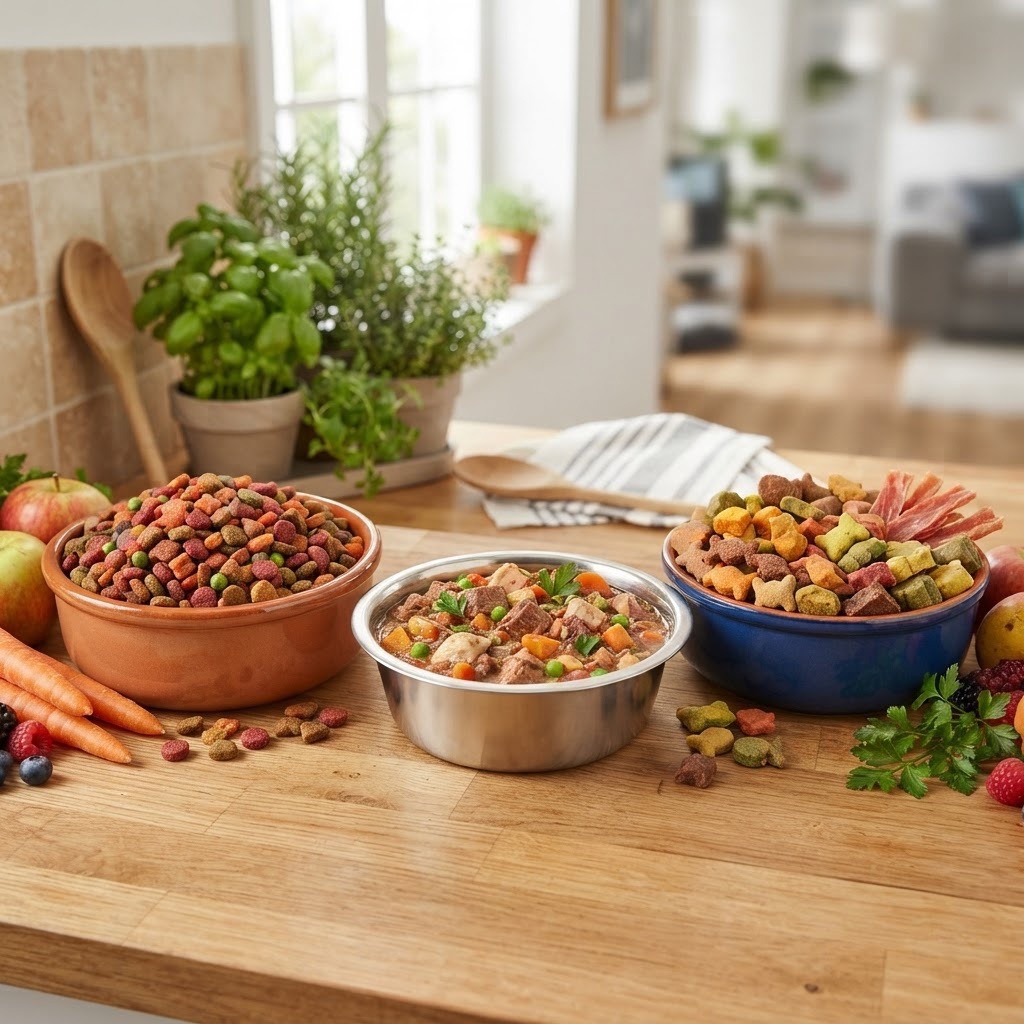
Match Color to Pet Food Format
Get in touch to request samples, discuss custom formulations, or obtain volume pricing for your supply chain.
talk to a color expertAdding color directly into the kibble dough before extrusion exposes it to the full heat, pressure, and shear of the extrusion process — a demanding combination that requires colors proven stable under those specific conditions.
Alternatively, color can be applied as part of a post-extrusion coating or a palatant spray, avoiding direct exposure during extrusion — though this approach introduces its own considerations regarding coating adhesion and even distribution across each piece of kibble.
Canned and pouched wet foods typically undergo retort processing to ensure shelf stability, exposing color to intensive, sustained heat — similar in principle to, though generally more demanding than, the pasteurization processes discussed in our dairy series.
Wet food's high-moisture, protein- and fat-rich matrix behaves differently than a dry or low-moisture system, requiring colors compatible with both the retort process and the specific base ingredients of the formulation.
Baked pet treats share direct formulation parallels with our bakery series and face similar heat exposure and browning considerations. In contrast, extruded treats face the same extrusion-specific stress covered later in this series.
Soft chews often share a formulation base more closely aligned with nutraceutical gummies or confectionery gels. Dehydrated jerky-style treats introduce a different set of moisture-removal and extended-drying-time considerations for color stability.
As in every category covered in this series, matching a color's solubility profile to the specific pet food format — wet, dry, coated, or baked — remains the foundational first step before addressing any format-specific processing stress.
Many pet food products combine multiple components — kibble with visible color-coded pieces, or treats with a colored coating over a differently colored center — requiring color selection to ensure visual coordination across the entire product, not just a single component in isolation.

© 2026 Vivify food & beverage | All Rights Reserved | SITEMAP | ACCESSIBILITY statement | TERMS