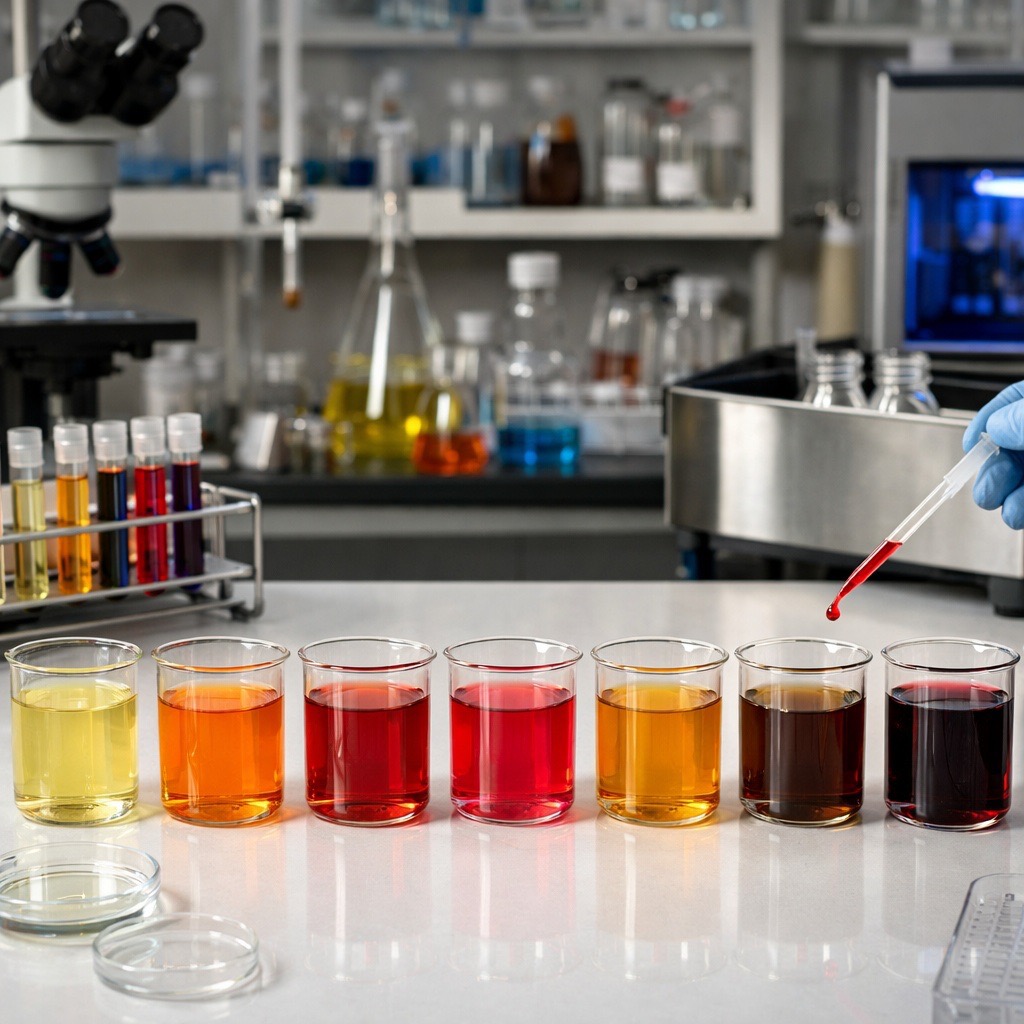
Practical Synthetic-to-Natural Transition
Get in touch to request samples, discuss custom formulations, or obtain volume pricing for your supply chain.
talk to a color expertClean-label expectations continue to push brands away from synthetic (FD&C) colors toward naturally derived alternatives, driven by consumer preference and, increasingly, retailer sourcing policies.
Beyond consumer preference, an evolving regulatory landscape around certain synthetic colors in some regions and categories is prompting proactive reformulation, even ahead of firm mandates.
Common synthetic-to-natural mapping starts with the hue family: reds and pinks often map to anthocyanins or beet-derived colors, yellows and oranges to curcumin or beta-carotene, and blues to spirulina extract. But matching hue is only the starting point — matching performance under the beverage's specific pH, light, and fortification profile is the harder part.
Natural colors don't always replicate a synthetic shade one-to-one at equivalent use levels — some require higher use levels or blending multiple natural sources to hit the same visual target, which has downstream cost and labeling implications.
A natural color candidate needs to be evaluated in the real formulation — not just as an isolated ingredient — accounting for the beverage's pH, packaging, fortification, and expected shelf life, as outlined in our beverage stability post.
Some natural color sources carry subtle flavor or aroma notes at higher use levels. Sensory evaluation, alongside color evaluation, helps ensure that the reformulated product still matches the brand's flavor profile, not just its visual target.
Natural colors often require different usage levels than their synthetic counterparts, which affects both formulation costs and label declarations — this should be modeled early, not discovered late in development.
A color that looks correct at time-zero can still fail well before the end of shelf life. Full-duration stability testing — not just an initial visual check — is essential before a reformulated product moves to market.
Switching from a synthetic to a natural color changes ingredient declarations and may affect claims (e.g., “no artificial colors”). Coordinating reformulation timelines with labeling and regulatory review avoids last-minute launch delays.

© 2026 Vivify food & beverage | All Rights Reserved | SITEMAP | ACCESSIBILITY statement | TERMS