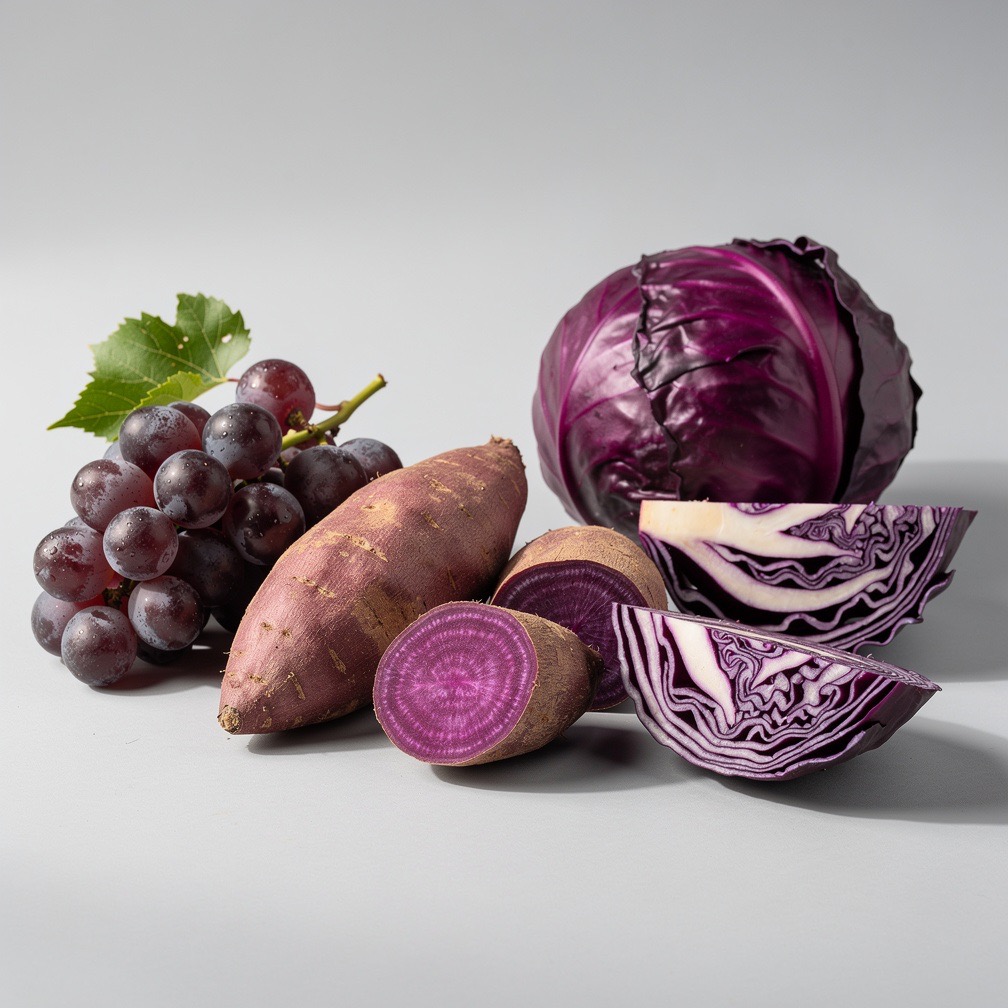
Three purple sources compared
Get in touch to request samples, discuss custom formulations, or obtain volume pricing for your supply chain.
talk to a color expertGrape skin extract, purple sweet potato, and red cabbage are all anthocyanin-based, following the same pH-driven chemistry covered in our anthocyanins explainer. Still, each brings a different hue, stability profile, and formulation history to the table. Choosing between them comes down to understanding what makes each source's anthocyanin profile distinct.
Grape skin extract, sometimes labeled as enocyanin, is one of the longest established anthocyanin sources in commercial use, with deep roots in the wine and juice industries. It delivers a deep red-purple to violet tone. It performs reliably in beverage applications, though its acylation level varies by grape variety and extraction method, leading to some batch-to-batch variation in hue and stability.
Purple sweet potato stands out for its high degree of acylation, which gives its anthocyanins meaningfully better heat and pH stability than many other natural purple sources. It delivers a clean, true violet-purple and has become a preferred choice wherever a formulation needs to withstand real processing heat without drifting toward pink or brown.
Red cabbage extract is another highly acylated anthocyanin source, delivering a purple that leans slightly cooler and more blue-toned than grape or purple sweet potato. It has a strong track record in confectionery applications, where its stability under processing conditions and ability to maintain a consistent shade throughout an extended shelf life have made it a standard choice.
Grape skin extract is generally the strongest choice when the target shade leans warmer, toward a red violet rather than a true purple, and it remains a natural fit for beverage applications with an existing wine or grape flavor association.
Purple sweet potato is worth prioritizing whenever a formulation will experience meaningful heat exposure, since its high acylation level gives it a real stability advantage over less acylated anthocyanin sources in baked goods and heat-processed beverages alike.
Red cabbage extract is the strongest option when the target shade leans cooler and more blue-toned, and its established performance in confectionery makes it a dependable starting point for candy and snack applications.

© 2026 Vivify company llc | All Rights Reserved | SITEMAP | ACCESSIBILITY statement | TERMS