Beverage-Specific Degradation Factors
Get in touch to request samples, discuss custom formulations, or obtain volume pricing for your supply chain.
talk to a color expertMany beverages — juices, sodas, sports drinks — sit in a notably acidic pH range compared to other food categories. This affects natural pigments differently than a neutral or alkaline matrix would, and it's one of the first variables to characterize before selecting a color.
As covered in our bakery stability post, anthocyanins shift hue with pH — but beverages' consistently low pH tends to push these pigments toward red and pink tones, which can be an advantage or a limitation depending on the target shade.
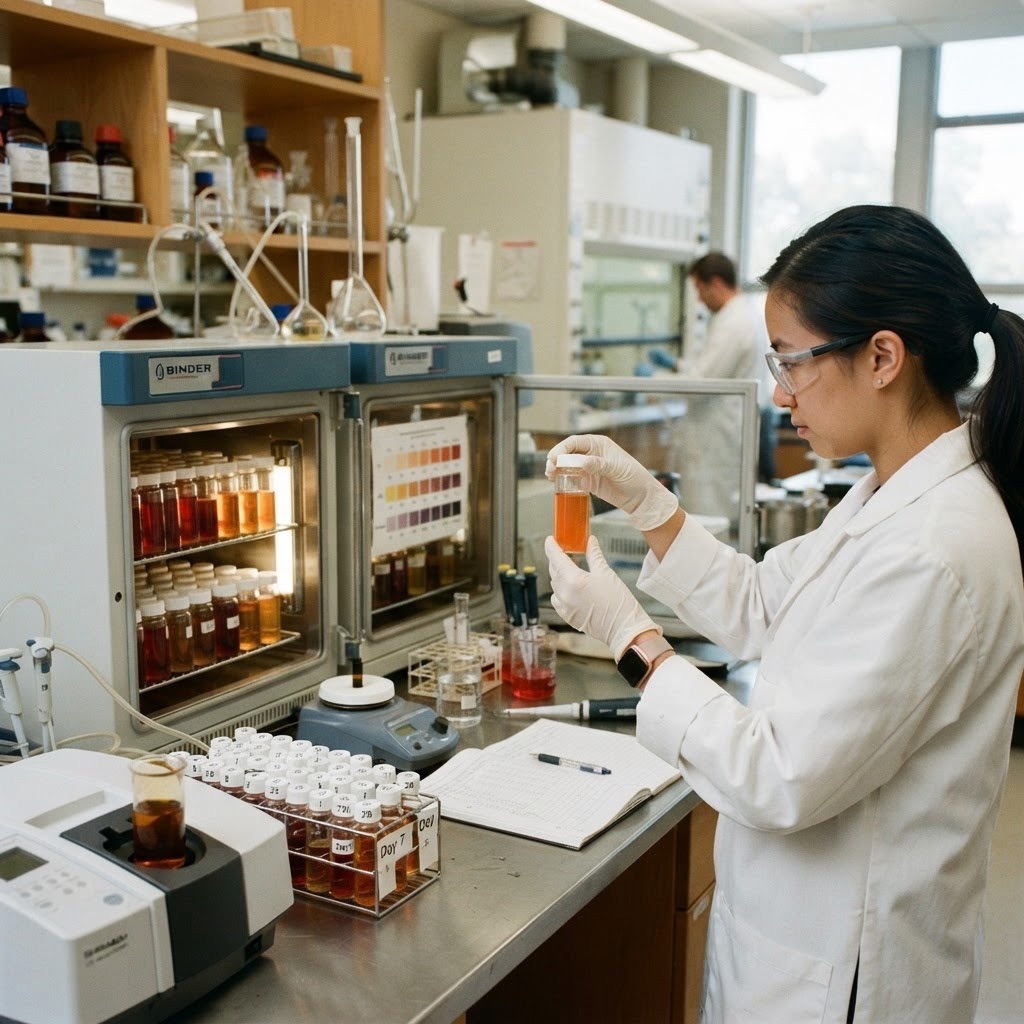
Beverages in clear PET or glass are far more susceptible to photodegradation than those in opaque bottles, cans, or UV-treated packaging. Light-sensitive pigments can visibly fade within a matter of weeks under retail shelf lighting or direct sunlight.
Accelerated light-stability testing that mimics actual retail display conditions — not just dark storage — gives a more realistic picture of how a color will perform through the product's full shelf life.
Vitamin C (ascorbic acid) is a common fortification ingredient in beverages. Still, it's also a reactive compound that can accelerate degradation of certain natural pigments — anthocyanins in particular are known to be sensitive to ascorbic acid's oxidative effects.
When a beverage formulation calls for both vitamin C fortification and a natural color, these two goals can work against each other unless the color system is specifically selected — or protected — with that interaction in mind.
Adding antioxidants or chelating agents to a formulation can help mitigate oxidative stress that accelerates color loss, particularly in vitamin C–fortified products.
Because light and oxygen exposure play such a large role in beverage color stability, packaging choice, bottle material, and capliner opacity should be treated as part of the formulation strategy, not a decision made independently of it.

© 2026 Vivify company llc | All Rights Reserved | SITEMAP | ACCESSIBILITY statement | TERMS