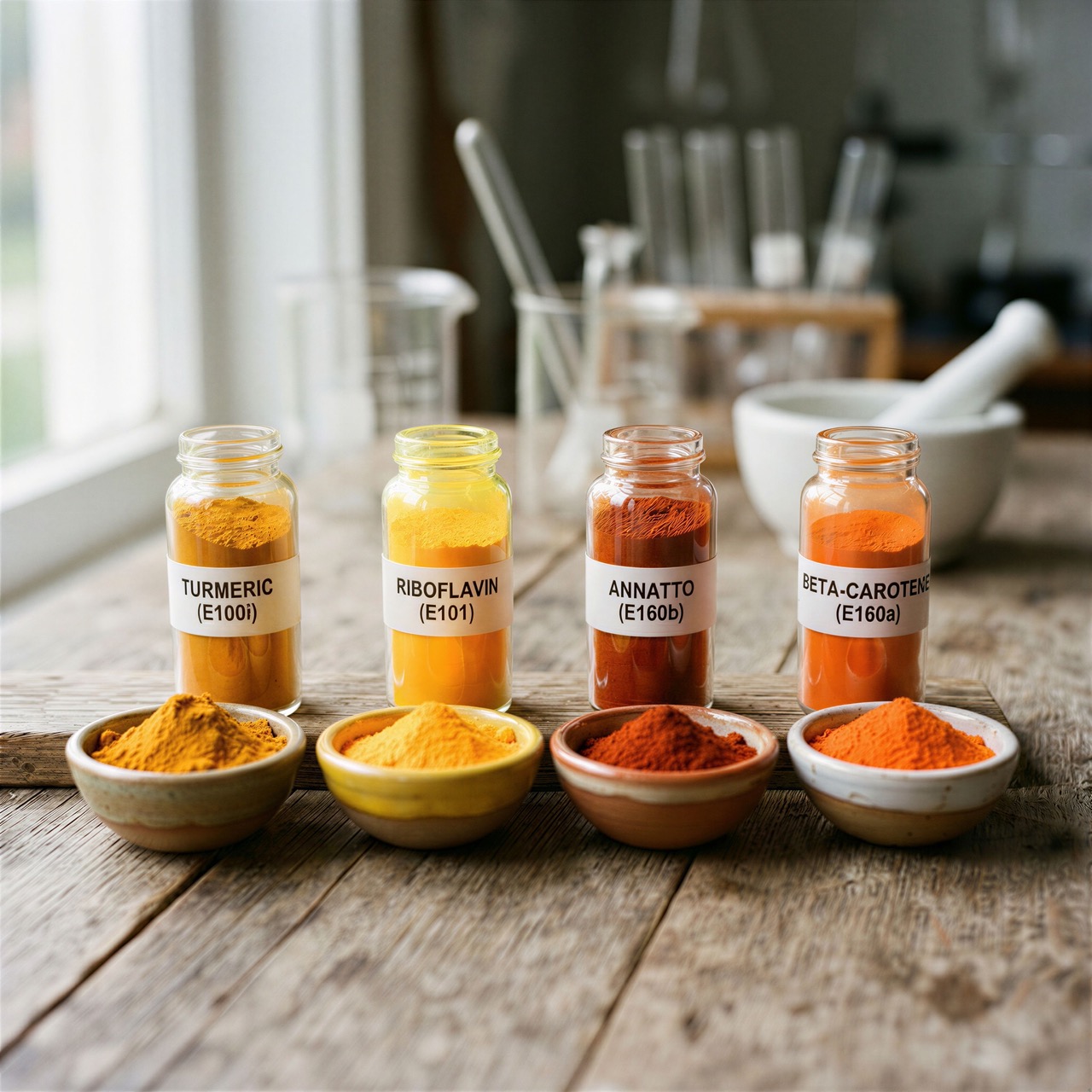
Four natural yellow options
Get in touch to request samples, discuss custom formulations, or obtain volume pricing for your supply chain.
talk to a color expertYellow appears in more products than almost any other color, from cereal and snack coatings to beverages, dairy, and baked goods. That ubiquity means a yellow reformulation decision rarely affects a single product line. It usually affects an entire portfolio, making it more valuable to pick the right natural source from the start than it might be for a narrower color category.
Yellow 5 and Yellow 6 sit alongside Red 40 in the FDA's voluntary phase-out of synthetic dyes announced in April 2025, with an industry target that trackers now describe as the end of 2026 or 2027, depending on the source. We cover the regulatory detail and a full replacement strategy in our companion post on replacing Yellow 5 and Yellow 6. This post focuses on what each natural yellow source brings to a formulation, regardless of what drives the switch.
Curcumin, extracted from the turmeric root, delivers one of the most vivid and recognizable yellows in the natural color toolkit. It is oil-soluble and disperses cleanly into fat-based systems such as shortbread, sauces, and dressings. Its main limitation is its sensitivity to alkaline pH, where it can shift from bright yellow toward a reddish-orange tone, a behavior worth testing for in any formulation that leans alkaline.
Riboflavin offers a cleaner, slightly greenish yellow and stands out for its heat stability, holding up well through pasteurization and baking better than most other natural yellow sources. It is water-soluble at the low concentrations typically used for color, and it carries a built-in nutritional story as vitamin B2. Its main constraint is a narrower hue range than turmeric or annatto, which limits how deep or golden a shade it can reach on its own.
The water-soluble, saponified form of annatto, known as norbixin, delivers a softer, more golden-yellow hue than the deeper orange of its oil-soluble counterpart, bixin. It has a long history in dairy applications, where it contributes color without a noticeable impact on flavor, and it remains one of the gentlest options available when flavor neutrality matters as much as hue.
At lower use rates than needed for a full orange, beta-carotene appears pale to golden yellow, making it a flexible option that can be dialed toward yellow or orange depending on concentration. It shares the same heat tolerance and provitamin A nutritional angle covered in our orange-colored posts, and it is available in a water-dispersible beadlet form for beverage applications.
Turmeric generally delivers the most vivid, saturated yellow of the four sources. It is the strongest starting point when a bold, attention-grabbing shade is the goal, provided the finished product stays on the acidic to neutral side of the pH scale.
Riboflavin is the most dependable choice when a product will see significant heat processing, since it resists degradation better than turmeric or annatto under sustained high temperatures. Beta-carotene is a close second, particularly in applications that also benefit from its added heat tolerance in fat-based systems.
Riboflavin and beta-carotene both have nutritional stories beyond color, contributing vitamin B2 and provitamin A activity, respectively. For products already built around a nutrition or supplement positioning, choosing one of these two sources allows the color additive to reinforce the product's broader health claim rather than sit apart from it.

© 2026 Vivify company llc | All Rights Reserved | SITEMAP | ACCESSIBILITY statement | TERMS