Simplify brown for label
Get in touch to request samples, discuss custom formulations, or obtain volume pricing for your supply chain.
talk to a color expertCaramel color is genuinely safe at the levels used in food, a conclusion shared by the FDA, the European Food Safety Authority, and Health Canada. Even so, the term has picked up a degree of consumer wariness over the years, driven in part by California's warning-label requirement tied to a processing byproduct in two of the four recognized caramel color classes. That perception gap between an ingredient regulators consider safe and one some consumers now scrutinize is exactly the kind of gap a clean label strategy is built to address.
It is worth being precise about what clean label actually means. There is no legal definition of the term, and no regulatory body requires a product to meet any particular clean label standard. It is fundamentally a consumer perception and brand positioning exercise, built around ingredient familiarity, statement length, and processing simplicity, rather than a food safety requirement. That distinction matters because it means the goal is communication and trust, not correcting an actual safety problem with the ingredient being replaced.
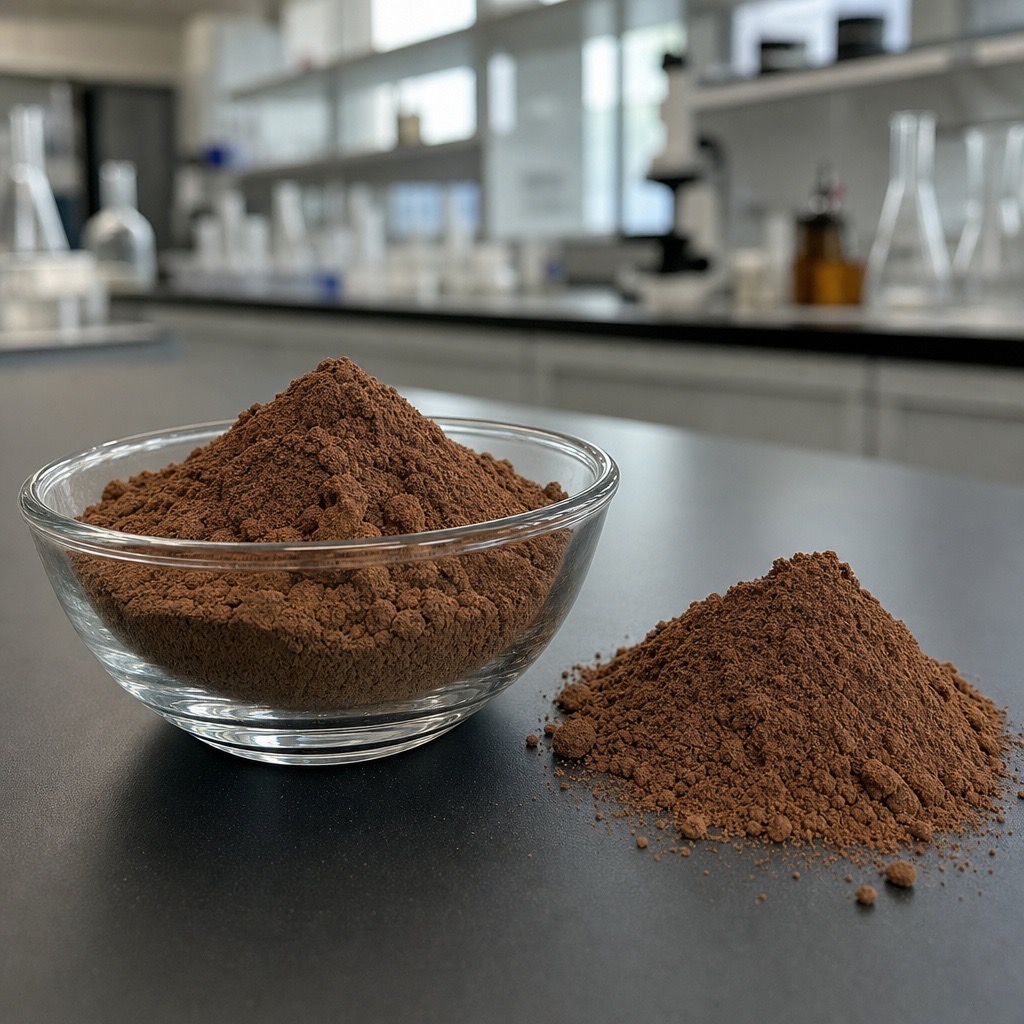
Cocoa powder and cocoa extract are about as label-friendly as a brown colorant gets, since both are universally recognized ingredient names that carry no processing mystery for the average shopper. As covered in our previous post, the trade-off is a genuine chocolate flavor contribution that needs to fit the product.
Vegetable juice concentrate, often made from black carrot or a similar deeply pigmented vegetable, reads as an immediately understandable,wholesome-sounding ingredient and delivers a genuinely flavor-neutral, deep brown. This combination of label appeal and functional performance makes it one of the strongest overall options for a clean label brown strategy.
Carob extract has a long-standing reputation as a natural, minimally processed ingredient, and its name alone often conveys a clean, recognizable story to shoppers already familiar with carob as a cocoa alternative in other product categories.
The most label-friendly options are not always the most flavor neutral ones. Cocoa and carob both read well on a label but carry real flavor implications. At the same time, vegetable juice concentrate offers flavor neutrality but a less immediately recognizable name to some shoppers than cocoa. Weighing label appeal against flavor impact should happen early in the selection process, not as an afterthought.
As with every natural color swap covered in this series, expect a different cost position and use rate than caramel color, and build them into the formulation budget before committing to a clean-label brown strategy across a product line.
Caramel color remains a legitimate, safe, and highly functional choice, particularly Class I and Class II caramel colors, which do not involve the ammonia-based process linked to the byproduct that drives consumer concern. For products where label perception is less central to the brand's positioning, caramel color often remains the most cost-effective and technically reliable option, and switching away from it should be a deliberate brand decision rather than an assumed default.
Decide upfront whether the goal is a specific label claim, a shorter ingredient statement, or simply avoiding a specific ingredient name, since each goal points toward a different alternative and a different level of formulation effort.
Once a candidate alternative is chosen, test it against the product's actual heat, pH, and shelf-life conditions using the same discipline covered throughout this series, rather than assuming a label-friendly ingredient will perform identically to caramel color without validation.
If a genuine clean-label goal drives a reformulation, make sure the packaging and marketing team can clearly and accurately communicate the change to shoppers, since the value of a clean-label reformulation depends heavily on whether consumers actually notice and understand what changed.

© 2026 Vivify company llc | All Rights Reserved | SITEMAP | ACCESSIBILITY statement | TERMS