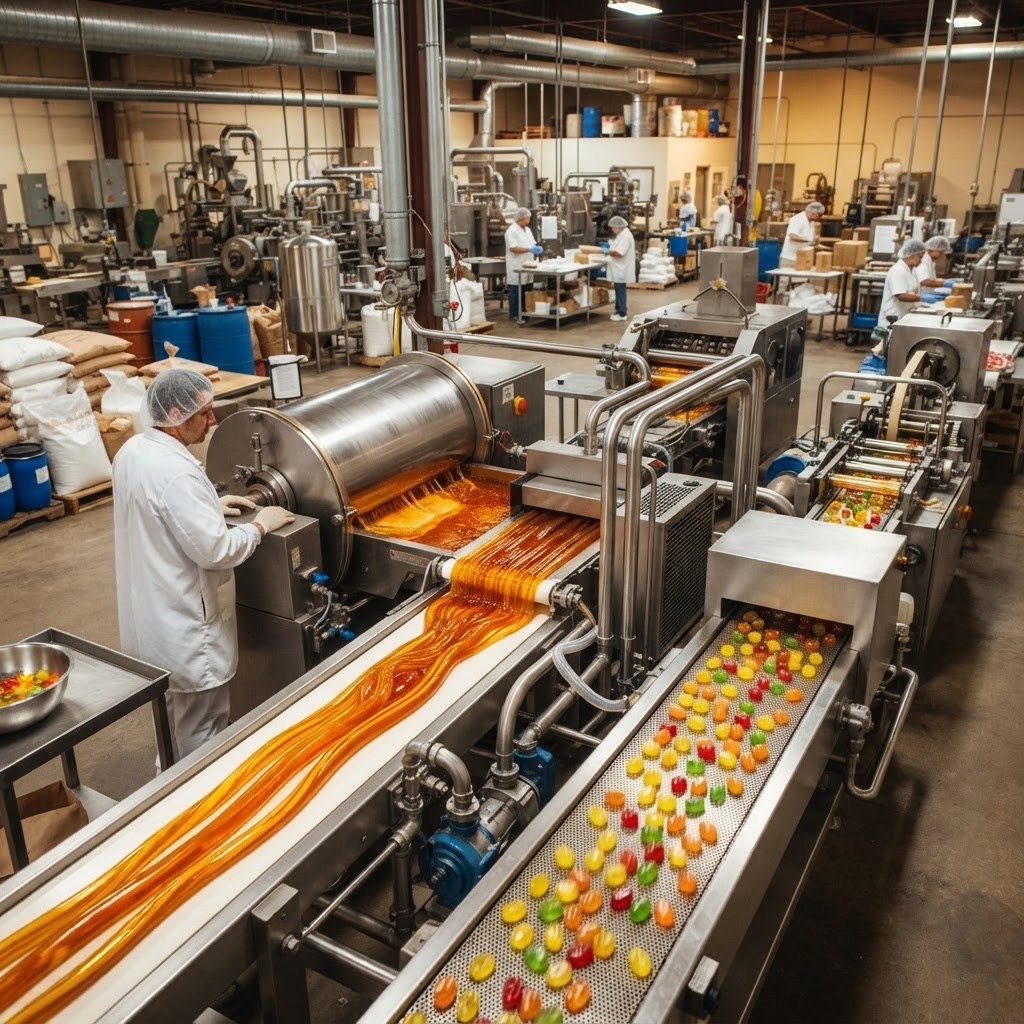
Process Shapes Color Outcome
Get in touch to request samples, discuss custom formulations, or obtain volume pricing for your supply chain.
talk to a color expertMany confectionery processes involve a high-temperature cook stage — boiling sugar for hard candy, cooking gummy slurry, or tempering chocolate — each with its own temperature profile that a color needs to survive without degrading or shifting hue mid-process.
Beyond peak temperature, the total time a color spends at elevated heat — including hold times during batch production and gradual cooling — contributes to cumulative thermal stress, which can matter as much as the peak temperature itself.
Mixing, extrusion, and depositing processes apply mechanical shear that can affect how evenly a color disperses through a batch — inconsistent mixing is a common cause of streaking or batch-to-batch shade variation, independent of the color's inherent stability.
Enrobing chocolate or compound coatings over a candy center introduces its own process variables — coating temperature, thickness, and cooling rate all influence how a fat-soluble color develops on the finished piece.
Moisture levels and water activity in a confection influence not only microbial stability but also the risk of color migration — colors can bleed between layers or pieces in higher-moisture products over time, especially under warm storage conditions.
In products where sugar crystallization is part of the intended texture (like fondant or some panned candies), the crystallization process itself can affect how color appears in the finished product, sometimes creating a lighter or more opaque visual effect than the uncrystallized mix.
Rather than selecting a color first and testing it against production afterward, mapping the full time-temperature-shear profile of a specific confectionery process up front enables a more targeted, efficient color selection process.
Pilot-scale results don't always translate directly to full production-line conditions — ongoing collaboration through scale-up trials helps identify and correct process-related color issues before they become a costly commercial-batch problem.

© 2026 Vivify company llc | All Rights Reserved | SITEMAP | ACCESSIBILITY statement | TERMS