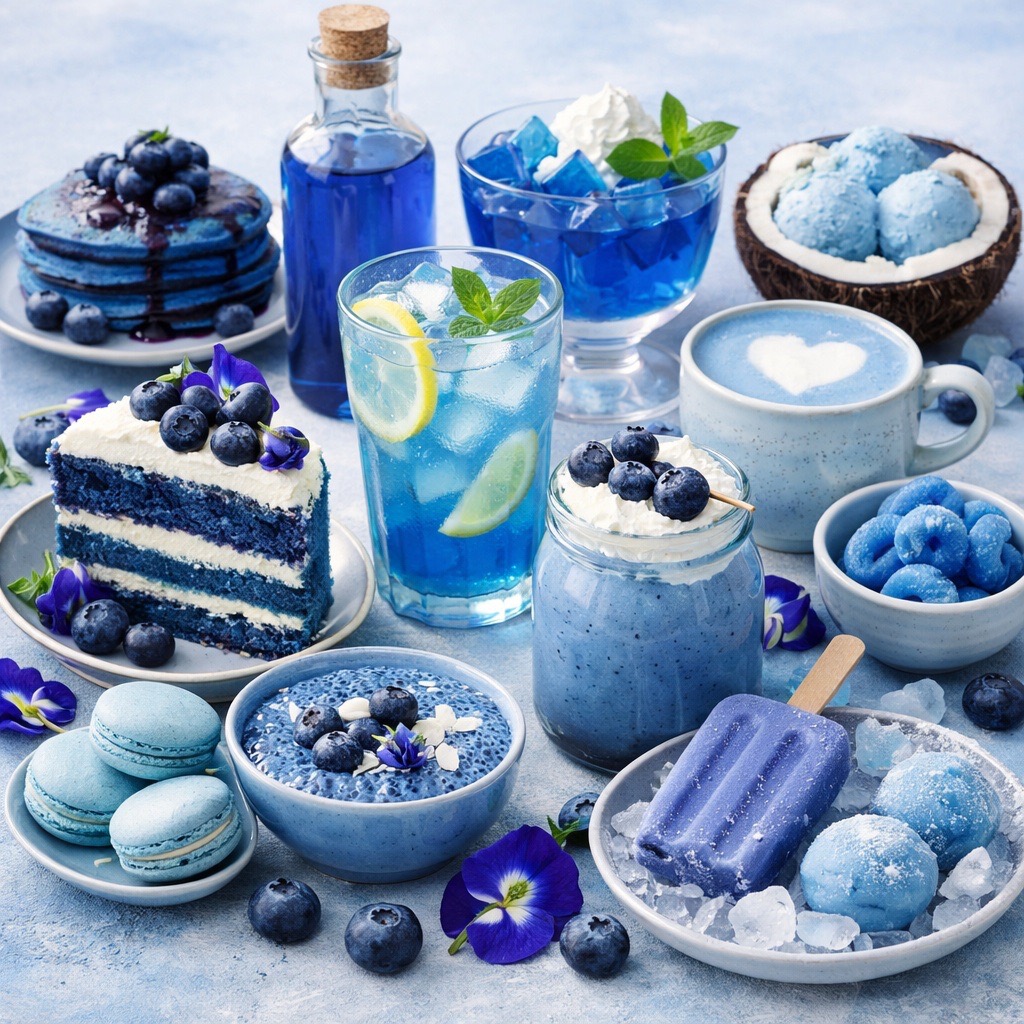
Blue's toolkit is expanding
Get in touch to request samples, discuss custom formulations, or obtain volume pricing for your supply chain.
talk to a color expertFor most of modern food manufacturing history, natural blue was not a realistic option at commercial scale, which is why FD&C Blue 1 and Blue 2 became the default across candy, beverages, and dairy for generations. The chemistry that makes a stable, vivid blue pigment is genuinely harder to source from nature than the chemistry behind red, orange, or yellow pigments. That gap has shaped decades of formulation practice.
Spirulina extract, approved for food use in 2013, was the breakthrough that gave formulators a real natural blue for the first time. Derived from blue-green algae, it remains the longest-standing and most widely approved natural blue source on the market today, and it paved the way for a wave of additional approvals that followed roughly a decade later.
Butterfly pea flower extract had already been available for narrower uses before receiving an expanded approval in 2025 covering blue, purple, and green shades from the same underlying source. That expansion turned a niche ingredient into a genuinely flexible option for formulators working across a color range rather than a single fixed target.
Galdieria extract blue, derived from the unicellular red algae Galdieria sulphuraria, was approved in 2025 as a distinct alternative to spirulina, giving formulators a second algae-derived option with its own performance profile rather than relying on a single algae source for every application.
Jagua blue, approved in 2023, and gardenia blue, approved in 2025, both rely on genipin, a compound extracted from fruit and reacted with a protein source to form a stable blue pigment. This shared chemistry represents a genuinely different approach from the algae and flower extracts that came before it, and it has delivered some of the most heat- and pH-stable natural blues available today.
The genipin chemistry behind gardenia and jagua blue relies on enzymatic cross-linking between genipin and amino groups in a protein source, forming a pigment structure that resists heat- and pH-driven breakdown, which limits spirulina and butterfly pea. This is a meaningfully different stability mechanism than anything used in the red, orange, or yellow categories covered earlier in this series.
As with other natural pigments covered throughout this series, encapsulation and spray drying continue to extend the practical shelf life of spirulina and butterfly pea extracts, protecting them from exposure to oxygen, light, and moisture during storage and giving formulators more flexibility, even with less inherently stable sources.
Precision fermentation, which uses engineered microorganisms to produce specific pigment compounds without relying on traditional agricultural extraction, is an active area of development for future blue pigments. While not yet a mainstream commercial source for food-grade blue, it represents a plausible next step in the same trajectory that brought spirulina, butterfly pea, gardenia, and jagua to market over the past decade.

© 2026 Vivify company llc | All Rights Reserved | SITEMAP | ACCESSIBILITY statement | TERMS