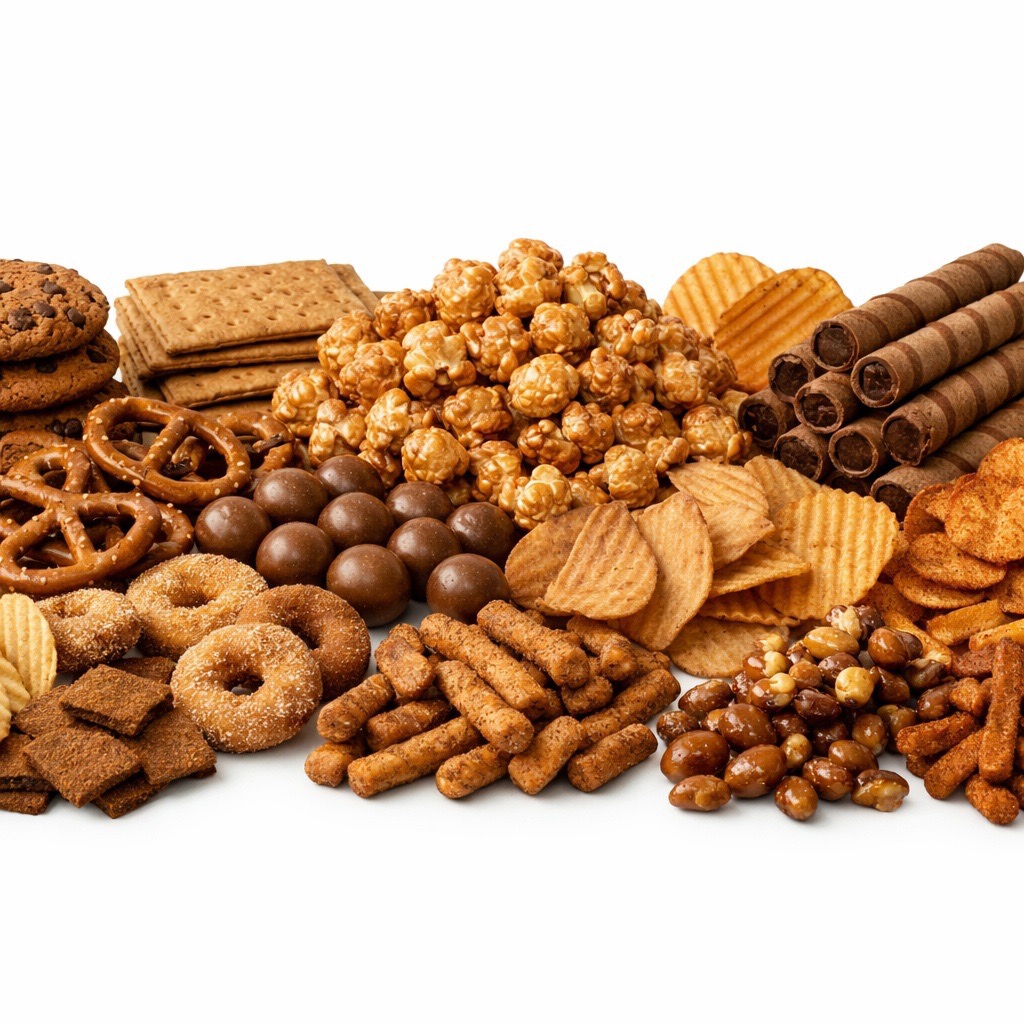
Build brown through blending
Get in touch to request samples, discuss custom formulations, or obtain volume pricing for your supply chain.
talk to a color expertUnlike red, orange, or yellow, very few natural sources produce a true brown on their own, aside from cocoa, carob, and vegetable concentrates covered in our previous post. Much of the time, a warm bakery or snack brown is built by layering or blending complementary tones, such as a red or orange source combined with a deep purple or near-black vegetable concentrate, following the same blending logic covered throughout this series for other in-between shades.
Brown covers a wide range, from a warm, reddish tone to a cool, almost gray-brown, and the right target usually follows the product's flavor profile. A cinnamon- or caramel-flavored snack calls for a warmer, moreamber-leaning brown. Likewise, a pretzel or savory cracker often reads best with a cooler, more neutral brown, and matching these expectations is as much a flavor communication exercise as a color one.
As covered in our bakery heat, pH, and fat post, the baking process itself generates real brown color through caramelization and the Maillard reaction on any product's crust or surface. This natural browning effect should always be accounted for before adding a color source, since a formulation that looks under colored in raw batter can end up perfectly on target once natural browning from the bake is factored in.
Cocoa or carob can be layered over a lighter base tone, whether that base comes from natural oven browning or an added carotenoid, to deepen and warm the final shade without requiring a single source to carry the entire color target. This layering approach also allows for more precise control over exactly how warm or deep the final brown reads.
A warm, reddish-brown can often be achieved by blending a carotenoid source, such as annatto or paprika oleoresin (both covered in our orange color posts), with a deep, near-black vegetable concentrate. This combination leverages the warmth of the carotenoid and the depth of the darker pigment to land on a genuinely rich brown that neither source could achieve alone.
Savory snacks generally benefit from a cooler, more neutral brown, often achieved through a black carrot or vegetable juice concentrate base with minimal additional warming, since a strong reddish or orange undertone can read as mismatched against a savory flavor profile.
Baked goods typically call for a warmer brown that complements natural oven browning, and this is where molasses, cocoa, or a carotenoid-and-vegetable-concentrate blend tends to perform best, particularly in products where a caramel or chocolate flavor association is already part of the product's identity.
Dry coatings and seasoning blends applied to snacks after baking or frying behave more like the dusting and decoration applications covered in our icings and fillings post, where dry pigment powders can be applied directly without the heat exposure concerns that affect a color mixed into a batter or dough before baking.
Blending multiple pigments toward brown carries a real risk of overshooting into a dull gray or muddy tone rather than a clean, appetizing brown, particularly when too many sources are combined at once. Building a blend from two carefully chosen sources rather than three or four generally produces a cleaner, more controllable result.
Cocoa and carob both contribute a real flavor that becomes more noticeable as use rate increases, so any formulation leaning on either source for a deep brown should be tested specifically for flavor impact, not just visual color, before finalizing the use rate.
Every component of a brown blend should be tested through a full production-scale bake cycle, since a blend that looks correct in raw batter can shift unpredictably as individual pigments respond differently to oven heat, echoing the same testing discipline covered in our original bakery stability post.

© 2026 Vivify company llc | All Rights Reserved | SITEMAP | ACCESSIBILITY statement | TERMS