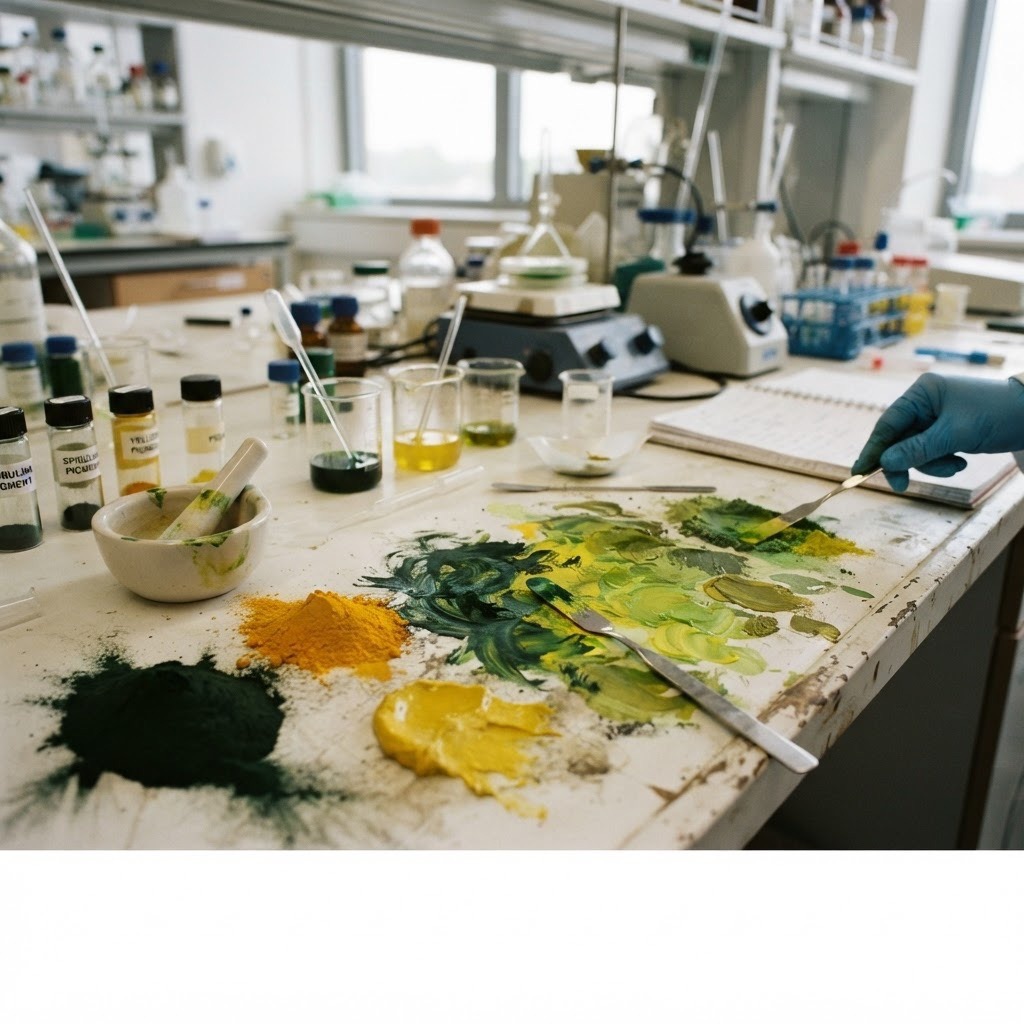
Blend spirulina with yellow
Get in touch to request samples, discuss custom formulations, or obtain volume pricing for your supply chain.
talk to a color expertUnlike red, orange, yellow, or blue, there is no single widely available natural pigment that reads as a clean, food-safe green on its own at commercial scale. Chlorophyll-based colorants exist but face their own approval and stability limitations in many markets, which means most natural greens used in food today are made by blending a blue source with a yellow one rather than being sourced from a single ingredient.
Spirulina extract, covered in our natural blue comparison post, is the most common blue base for a natural green, and pairing it with one of the yellow sources covered in our yellow color series gives formulators a reliable, repeatable path to green. This combination has become the de facto industry standard specifically because both components already have well-established food use and broad regulatory acceptance on their own.
Spirulina offers a genuinely vibrant blue starting point and the broadest approval history of any natural blue source, both of which are covered in detail in our blue color comparison. Its known sensitivity to heat, light, and low pH carries over directly into any green blend built on top of it, so the same stability precautions that apply to spirulina on its own apply equally, and in some cases more urgently, once it becomes part of a two-pigment green system.
Not every yellow source pairs equally well with spirulina. Riboflavin, covered in our natural yellow explainer, shares spirulina's general heat tolerance profile reasonably well and produces a clean, true green without introducing a strong flavor or an unstable third variable. Turmeric can also work, but its own alkaline sensitivity and more assertive flavor at higher use rates make it a better fit for applications where those trade-offs are already acceptable. Beta carotene is generally the least compatible partner of the three, since its warmer, more golden character tends to push the blend toward a duller, more yellow-leaning green rather than a clean, true green.
The right yellow partner ultimately depends on the same factors covered throughout this series: the base system's solubility, its heat exposure, and its flavor tolerance. A water-based beverage that stays within a moderate pH range is a strong fit for a spirulina-riboflavin blend.
A green blend is only as stable as its weaker component, so formulating for the more sensitive pigment, most often spirulina, should drive the overall process and packaging strategy rather than averaging the requirements of both pigments.
Spirulina and a yellow partner do not always degrade at the same rate under identical conditions, which means the blend's exact hue can drift over shelf life even if each pigment individually still tests within its own acceptable range. Testing the finished blend as a system, not just its two components separately, is essential before finalizing a formulation.
Given spirulina's sensitivity to both heat and light, the same encapsulation, packaging, and process timing strategies covered in our orange and blue stability posts apply directly here, and are often even more important in a green blend where any color shift is immediately visible as a move toward blue or yellow rather than a simple fade.

© 2026 Vivify company llc | All Rights Reserved | SITEMAP | ACCESSIBILITY statement | TERMS