The right natural red depends on your formulation, process, and performance requirements.
Get in touch to request samples, discuss custom formulations, or obtain volume pricing for your supply chain.
talk to a color expertRed is one of the most visually significant colors on the shelf. It signals ripeness, indulgence, and flavor intensity quickly, making it one of the more challenging colors to reformulate when brands move away from synthetic sources.
Shoppers increasingly scan ingredient panels for recognizable, plant- or insect-derived names rather than “FD&C” numbers, and product teams are responding by shifting red formulations toward beet-, tomato-, and cochineal-derived sources well ahead of any regulatory deadline.
The shift isn’t purely defensive. Natural reds now carry their own marketing equity. “Colored with beet juice” or “vegetable juice color” reads as a formulation choice a brand is proud of, not one it’s merely tolerating. That has turned red into a category where the right natural source is a genuine point of differentiation, not just a compliance checkbox.
Each of these four sources addresses the challenge of selecting a natural red differently, and the differences matter far more than the shared label claim of “natural.” There is no single natural red that performs best across every formulation. The right choice depends on the target shade, formulation system, processing conditions, pH, shelf-life requirements, and labeling considerations.
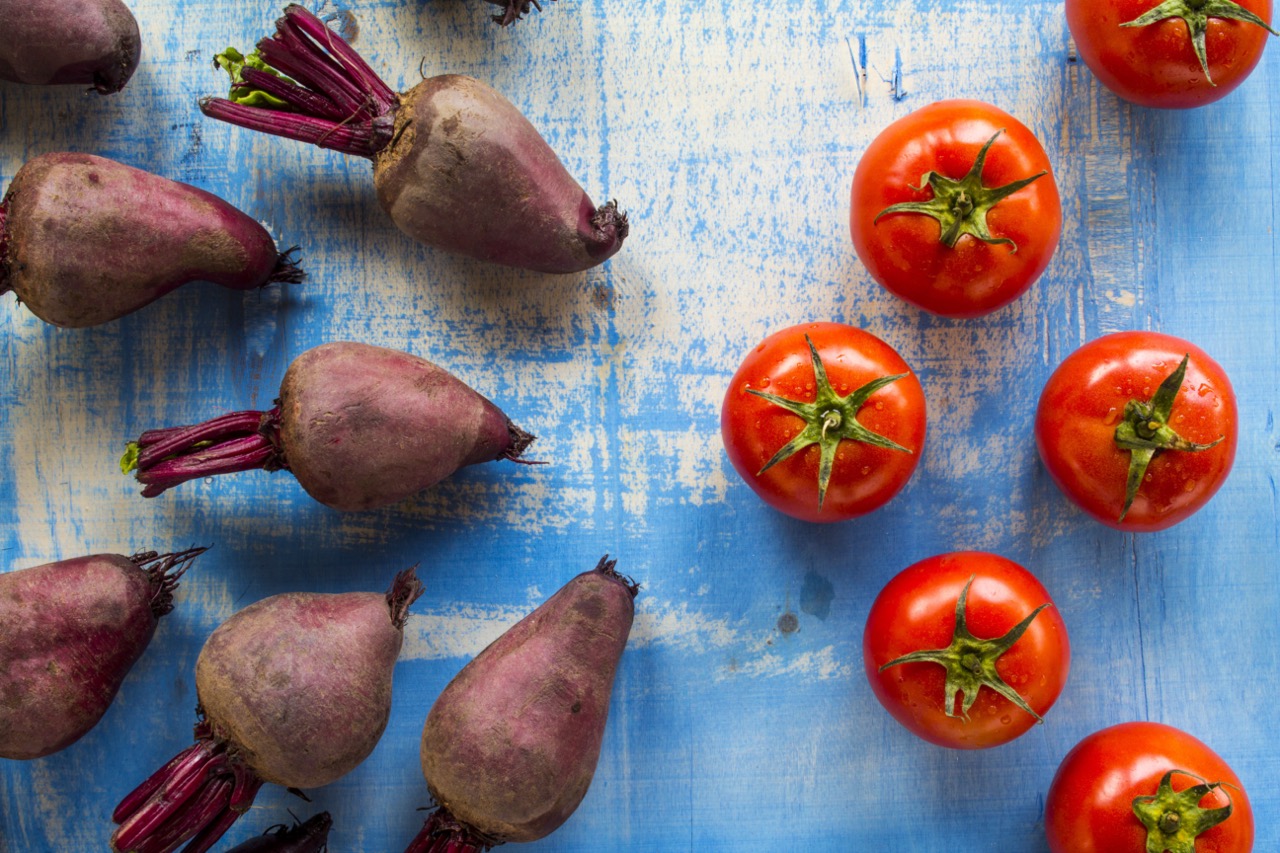
Betanin, extracted from red beet root, delivers a striking magenta-to-purple-red hue that performs well in water-based systems such as beverages, yogurts, and frozen desserts. It’s inexpensive relative to other natural reds and widely available at commercial scale. The trade-off is stability: betanin is notably sensitive to heat and light, which limits its use in products that undergo high-temperature processing or long shelf life under bright retail lighting.
Anthocyanins, sourced from black carrot, grape skin, radish, or purple sweet potato, are prized for their versatility. The same molecular class can appear red, pink, purple, or even blue depending on the pH of the finished product. That responsiveness is a double-edged sword: it’s a powerful formulation tool in the hands of a team that tightly controls pH, but it can produce unwanted color drift in products where pH varies from batch to batch. Anthocyanins generally hold their color best in acidic systems, which makes them a strong fit for juices, sparkling beverages, and confectionery formulated at a low pH.
Lycopene stands apart for its warm orange-red hue, making it particularly useful when a formulation calls for tomato-like or deeper warm-red tones rather than the magenta-red shades associated with beet and anthocyanins. It can be used across a range of food and beverage systems, including both oil-based and water-based applications, depending on the specific lycopene preparation and formulation approach. Its strong color and antioxidant association also give it potential value beyond color alone, although formulation performance depends on the finished product and processing conditions.
Carmine, derived from the cochineal insect, is widely regarded as a benchmark for stability. It holds a bright, true red under heat, light, and across a wide pH range, which is why it remains widely used in confectionery and processed meat applications. Its limitation isn’t performance; it’s positioning. Carmine is not vegan or vegetarian, and it raises questions about Halal and Kosher certification depending on sourcing and processing, so brands marketing to those consumer segments typically rule it out regardless of how well it performs technically.
pH is an important variable when selecting among these four sources. Anthocyanins are the most responsive to pH by design, shifting from red in acidic conditions toward blue or colorless as pH rises. This can be a useful formulation tool when pH is tightly controlled, but it can also produce unwanted color variation when finished-product pH changes from batch to batch. Betanin performs well within a moderate pH range but becomes less stable under more demanding conditions. Carmine and lycopene are comparatively less affected by pH changes, making them useful options when maintaining a consistent shade across varying formulation conditions is a priority.
Processing conditions can eliminate an otherwise ideal source before flavor or cost even enter the conversation. Betanin degrades measurably under high-temperature processing and extended light exposure, making it a better fit for cold-fill or short-shelf-life products than for retorted or shelf-stable lines. Anthocyanins generally tolerate pasteurization but can fade over long shelf life under light. Carmine and appropriately formulated lycopene preparations can offer strong stability under demanding processing and storage conditions, making them suitable for applications where color needs to remain consistent through processing and extended shelf life.
Start with the finished product and processing conditions, not just the target shade. Two products targeting a similar red may require very different color solutions depending on their pH, processing conditions, formulation matrix, shelf life, and labeling requirements.
From there, weigh:

© 2026 Vivify company llc | All Rights Reserved | SITEMAP | ACCESSIBILITY statement | TERMS