Vibrancy Meets Durability
Get in touch to request samples, discuss custom formulations, or obtain volume pricing for your supply chain.
talk to a color expertAchieving a vivid, saturated shade with natural colors often requires higher use levels than synthetic alternatives, which can affect cost, labeling, and — in some formats — flavor perception. Understanding this trade-off up front helps set realistic expectations for the target shade.
Some natural pigment sources are inherently better suited to bold, saturated shades than others — spirulina for vivid blues and greens, or concentrated anthocyanin sources for deep reds and purples, tend to deliver more visual punch per unit than more muted natural sources.
More saturated, purified color extracts can sometimes be more sensitive to degradation than less concentrated forms, since there's a larger visual “distance to fall” if any fading occurs — stability testing becomes even more important as target vibrancy increases.
Blending complementary natural pigment sources can sometimes yield a shade that's both visually bold and more fade-resistant than either source alone — a technique worth testing when a single natural colorant can't hit both targets.
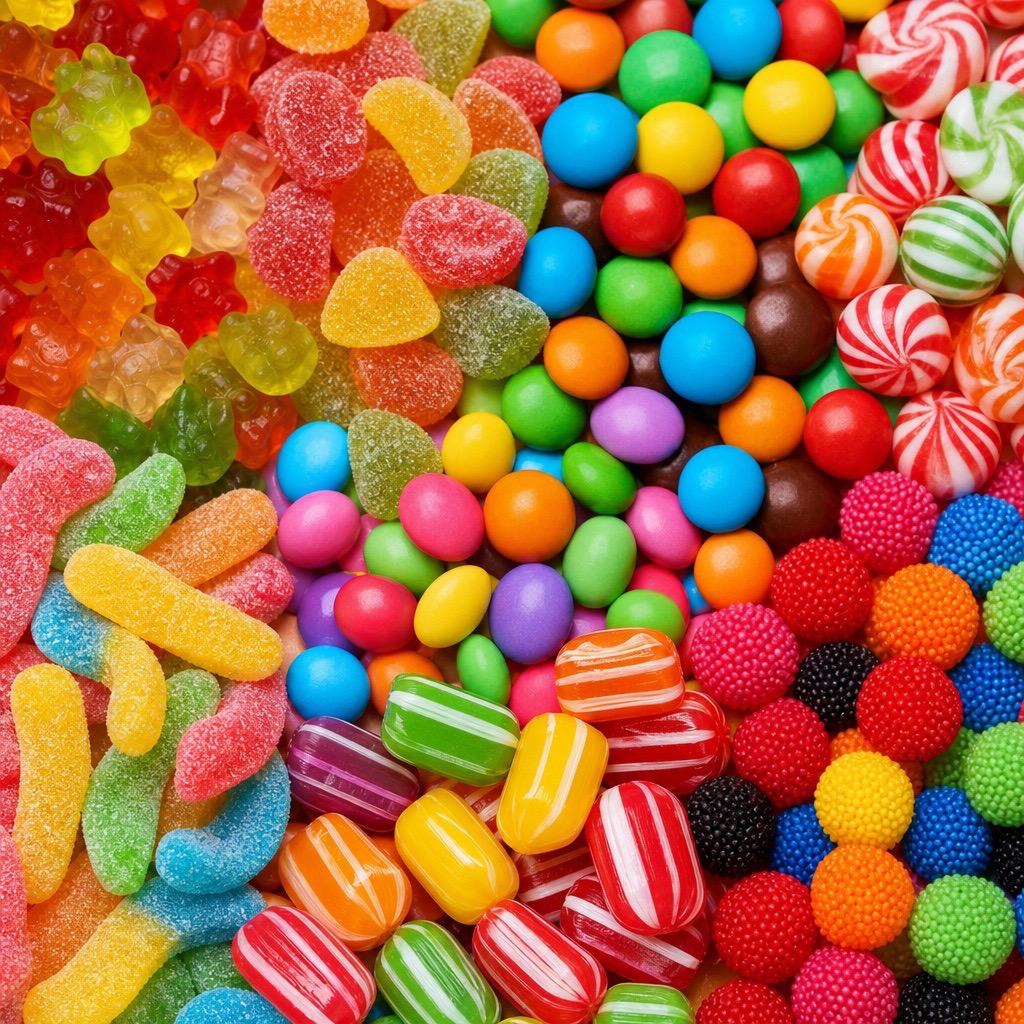
Panned candy shells (like coated gems or dragées) build up color in thin layers, which allows for very saturated, glossy final shades — but each layer needs to be evaluated for consistency, since uneven layering shows up as visible mottling.
Gummies or candies with multiple distinct color zones need each color evaluated not just for its own stability, but for bleed resistance against its neighboring colors — a common failure point in multi-colored confectionery.
A shade that looks bright and vivid at time-zero needs to be evaluated again at the end of the product's intended shelf life — brightness claims should be based on the full storage window, not just the initial production batch.
Confectionery is often stored and displayed at room temperature, sometimes for extended periods. It may be exposed to warehouse or retail lighting — testing under these realistic conditions, rather than ideal lab storage alone, provides a more accurate picture of stability.

© 2026 Vivify company llc | All Rights Reserved | SITEMAP | ACCESSIBILITY statement | TERMS