Lorem ipsum dolor sit amet, consectetur adipiscing elit. Suspendisse varius enim in eros elementum tristique. Duis cursus, mi quis viverra ornare, eros dolor interdum nulla, ut commodo diam libero vitae erat. Aenean faucibus nibh et justo cursus id rutrum lorem imperdiet. Nunc ut sem vitae risus tristique posuere.
Color is no longer a finishing detail in beverage development — it is a regulatory, commercial, and brand strategy asset that demands early-stage planning.
Get in touch to request samples, discuss custom formulations, or obtain volume pricing for your supply chain.
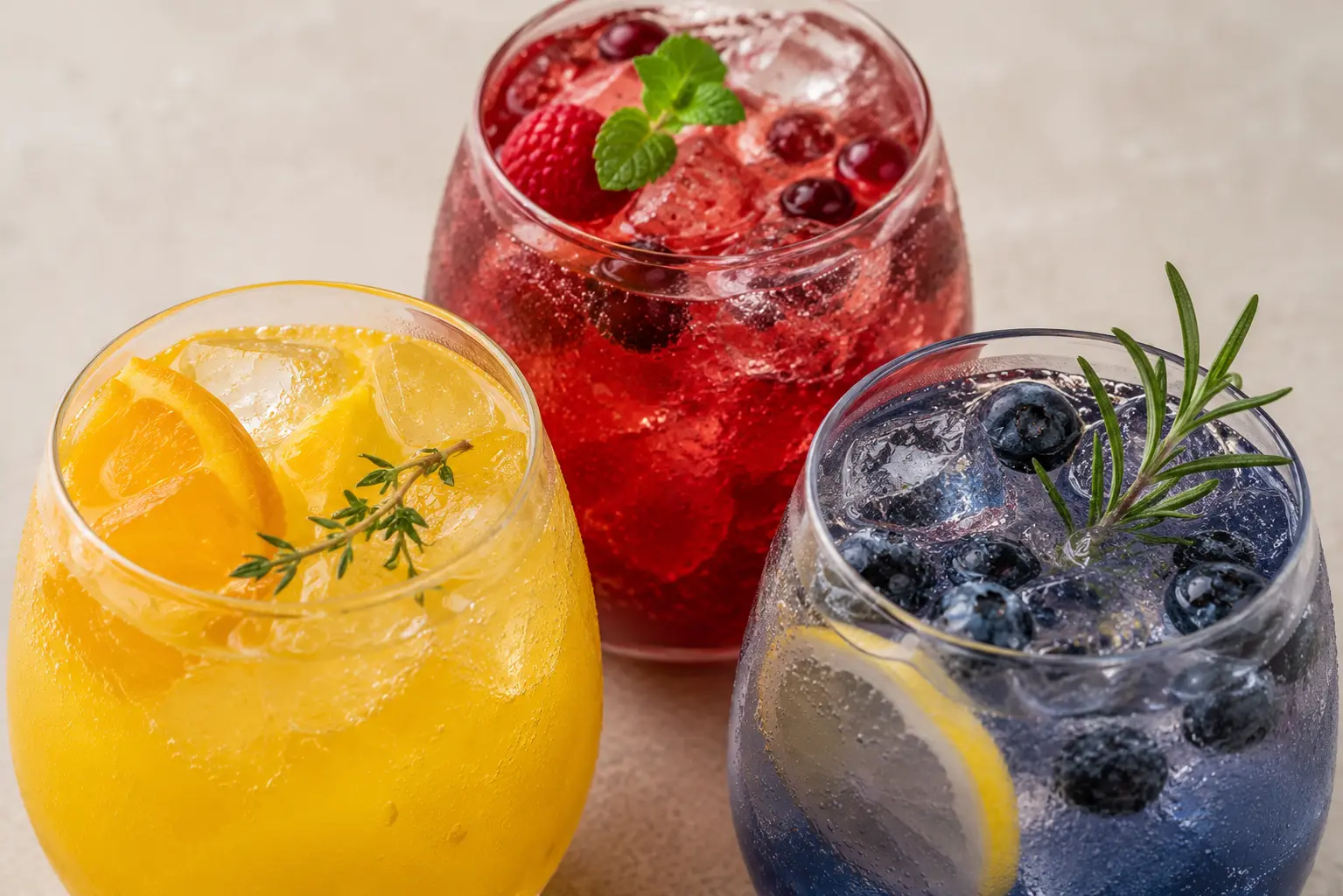
talk to a color expertVisual appeal has always played a role in beverage success, but its strategic importance has never been greater. Color is the first sensory signal a consumer receives — shaping expectations before aroma or taste ever come into play. Vibrant, well-defined hues signal freshness, flavor intensity, and perceived quality. In a crowded marketplace, color drives trial, repeat purchase, and social sharing — making it one of the highest-leverage variables in beverage innovation.
This dynamic plays out across three distinct commercial arenas. In on-trade environments, bartenders and mixologists use striking hues to elevate cocktails and mocktails into visual statements, reinforcing craft credentials and brand personality. At home, as consumers continue to premiumize everyday moments through home mixology and functional beverages, visually dynamic drinks create a sense of indulgence and differentiation. On platforms like Instagram and TikTok, color is at its most commercially influential: bold blues, vivid purples, fresh greens, layered gradients, and ombré effects consistently generate higher engagement and viral traction.
In this context, color is no longer merely aesthetic — it is communicative, actively shaping flavor expectations, reinforcing brand recall, and driving organic reach in crowded digital feeds. For B2B stakeholders, that means color decisions made at the formulation stage carry direct implications for marketing performance.
The regulatory environment surrounding beverage color is undergoing meaningful change, particularly in North America. The FDA has signaled a clear intent to reduce reliance on petroleum-based synthetic dyes across the food supply — prompting increased scrutiny of traditional FD&C colors that have long been formulation mainstays. While not framed as an immediate statutory ban, the agency's direction has accelerated reformulation efforts industry wide. Several U.S. states have already restricted artificial dyes in settings such as school meals and are exploring broader measures.
In response, many manufacturers are proactively committing to eliminate synthetic colors from portions of their portfolios — driven as much by consumer expectations as by regulatory momentum. Regulators are also expanding the range of approved color additives exempt from certification, giving formulators more tools to achieve vibrant, stable hues from natural sources. Emerging approved options include algae-derived Galdieria blue, butterfly pea flower extract, and calcium phosphate for white applications — each helping close historical gaps in the natural color palette.
One distinction matters for labeling and claims strategy: "natural" remains a marketing term, not a formal FDA definition. Legally, colors are classified as either certified synthetics or exempt from certification based on their source. Compliance language in product documentation and on-pack claims must reflect this — a point that procurement and regulatory teams should align on early in the development process.
Natural and botanical color profiles continue to gain traction as clean-label positioning becomes table stakes across beverage categories. The following ingredients are seeing the strongest growth in formulator specification activity:
Beyond compliance, color functions as a powerful layer of brand messaging. Consumers intuitively associate certain hues with specific benefits and emotional states — and beverage brands increasingly exploit this to tell ingredient stories and reinforce functional positioning without a single word of copy.
Beet- and berry-derived reds subtly communicate antioxidant benefits. Turmeric's golden tones visually reinforce associations with wellness and inflammation support. Bold or unexpected palettes — violet tonics, blue teas — signal seasonal offerings or limited-time experiences, creating urgency and excitement at shelf and online.
These visual narratives shape how consumers perceive functionality, quality, and overall product value — not just aesthetics. For brand managers, this means color selection belongs in the same strategic conversation as claims development and positioning architecture, not downstream in packaging design.
One of the persistent barriers to natural color adoption has been performance under real-world production and shelf conditions: light exposure, heat processing, and pH variation across different beverage formats. Advances in formulation technology are increasingly closing this gap — making the reformulation case more viable than it has ever been.
Microencapsulation protects sensitive pigments during processing and extends shelf stability in formats that previously degraded natural colors too rapidly. Improved extraction methods deliver higher pigment concentrations and more consistent color intensity batch-to-batch. pH-optimized color systems now allow natural colors to perform reliably in carbonated, acidic, and RTD applications that were once exclusively dependent on synthetics.
For procurement and R&D teams evaluating reformulation timelines, the practical implication is significant: the performance premium once associated with FD&C synthetics has narrowed substantially. Brands that begin reformulation planning now, ahead of regulatory pressure, will have more optionality and less timeline risk than those who wait.

© 2026 Vivify company llc | All Rights Reserved | SITEMAP | ACCESSIBILITY statement | TERMS